Masking Tape Recovered

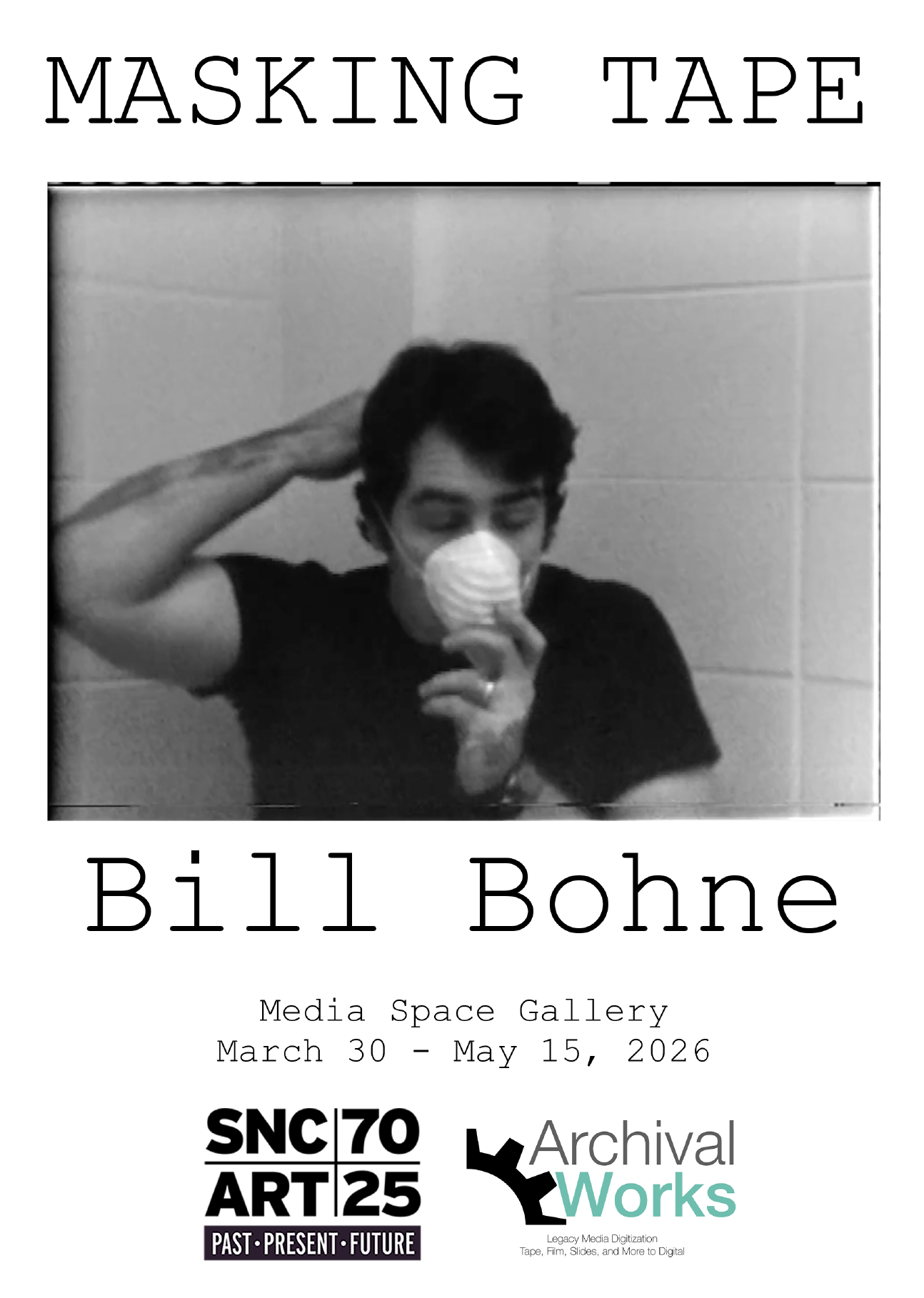
Bill Bohne’ Masking Tape (Early 1970s, Date Unknown)
Single Channel Video transferred from ¾” UMATIC Tape B/W, Silent, 11:50


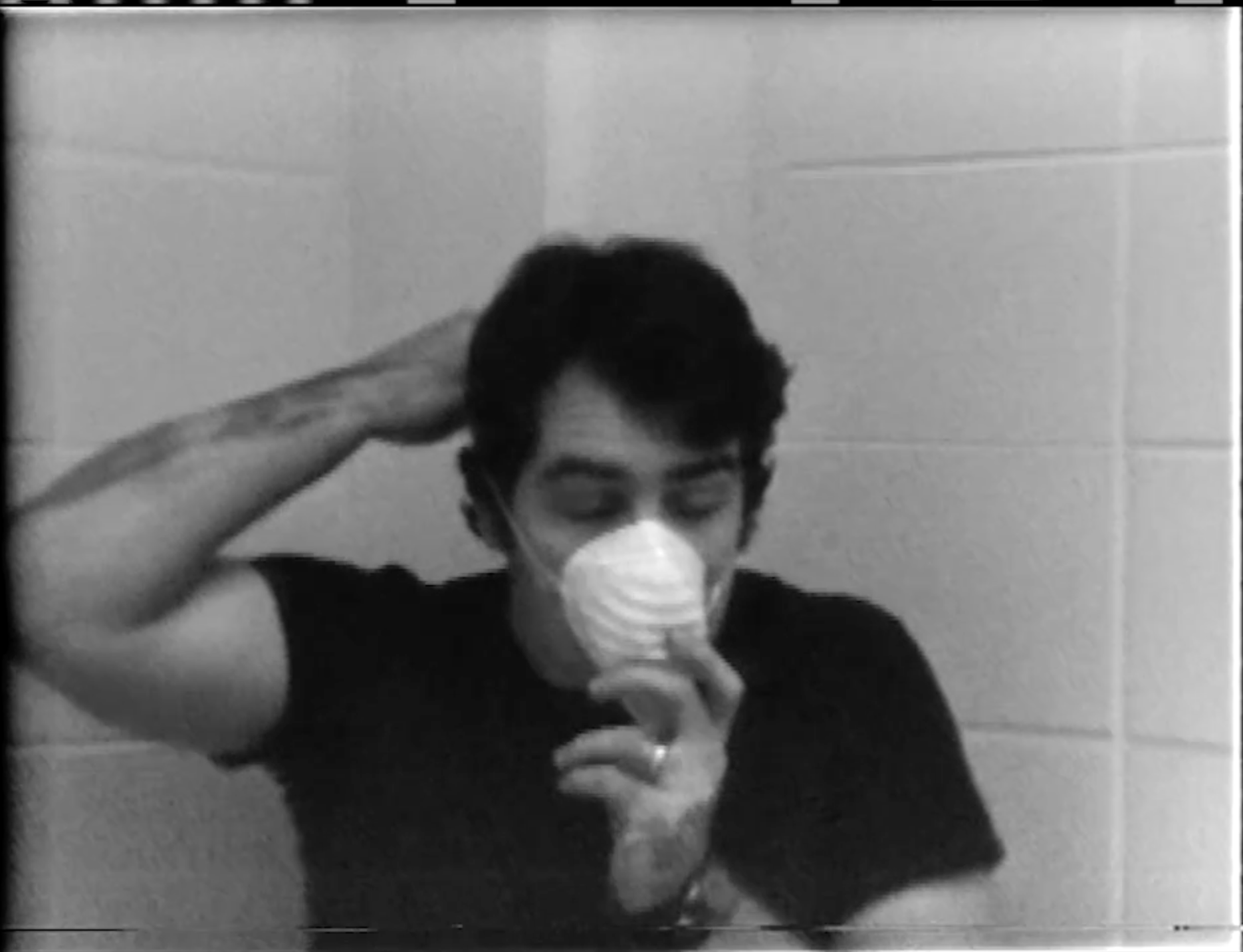
Bill Bohne’s video Masking Tape was created in the vein of early conceptual video art, specifically within the mode often described as “performance for camera.” Emerging in the late 1960s alongside the growing accessibility of portable video technologies, this approach was adopted by many artists exploring the possibilities of this experimental medium. These artists used the camera as the primary site of the work itself. Typically employing fixed framing, minimal editing, and durational actions. Such works foreground the body, repetition, and constraint while stripping away narrative and spectacle in favor of conceptual procedure.

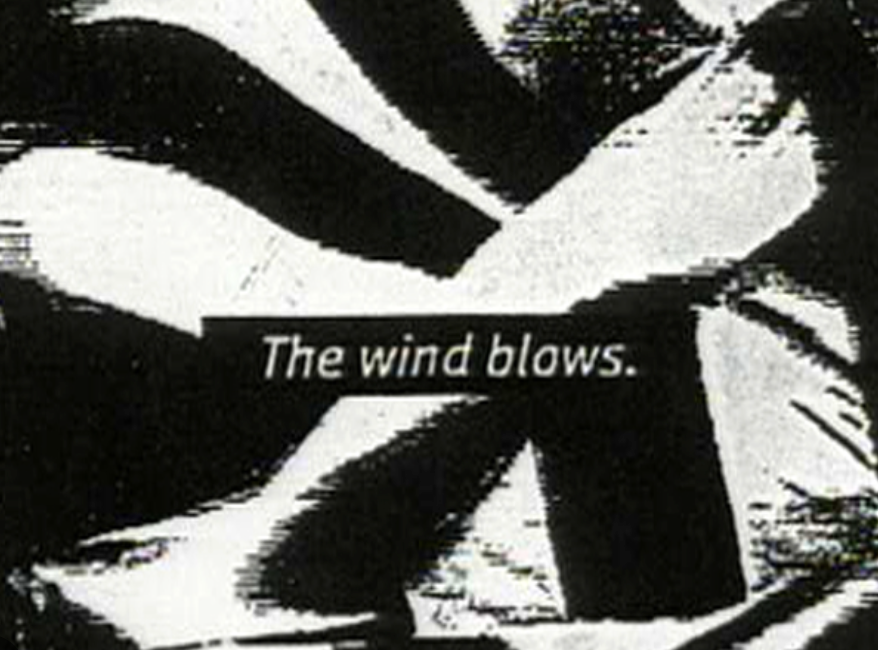
Masking Tape adheres closely to these conceptual strategies. The camera remains static, focused on a head-and-shoulders composition as Bohne methodically places disposable dust masks over his face, one after another, throughout the tape. The action is simple, repetitive, and task-based, aligning the work with conceptual art’s emphasis on systems and instructions. At the same time, the accumulating masks gradually become sculpturally absurd and begin to impede the mask’s function, introducing a subtle tension between safety and suffocation.

Originally recorded on 3/4″ U-MATIC tape, the video was rediscovered in a storage area of the Bush Art Center and later transferred to digital format by Archival Works in St. Paul, Minnesota. This material history reinforces the work’s origin in an early moment of video experimentation, when artists worked with emerging, often fragile recording technologies that have since required preservation to prevent deterioration.

Viewed today, Masking Tape accrues new layers of meaning. The act of placing mask upon mask, once read primarily through the lens of conceptual procedure or performance endurance, now inevitably recalls the lived experience of the recent COVID-19 pandemic. What may have originally functioned as an abstract or absurd gesture takes on renewed resonance as an image of protection, anxiety, and the social politics of masking. The work’s repetitive accumulation mirrors the psychological weight of prolonged crisis. In this way, Bohne’s video not only participates in the historical discourse of early video art but also demonstrates how such works can be reactivated by contemporary conditions, generating meanings beyond their original intention and context.


– Brandon Bauer, Associate Professor of Art (2026)

Opening Tonight with a Special Presentation!

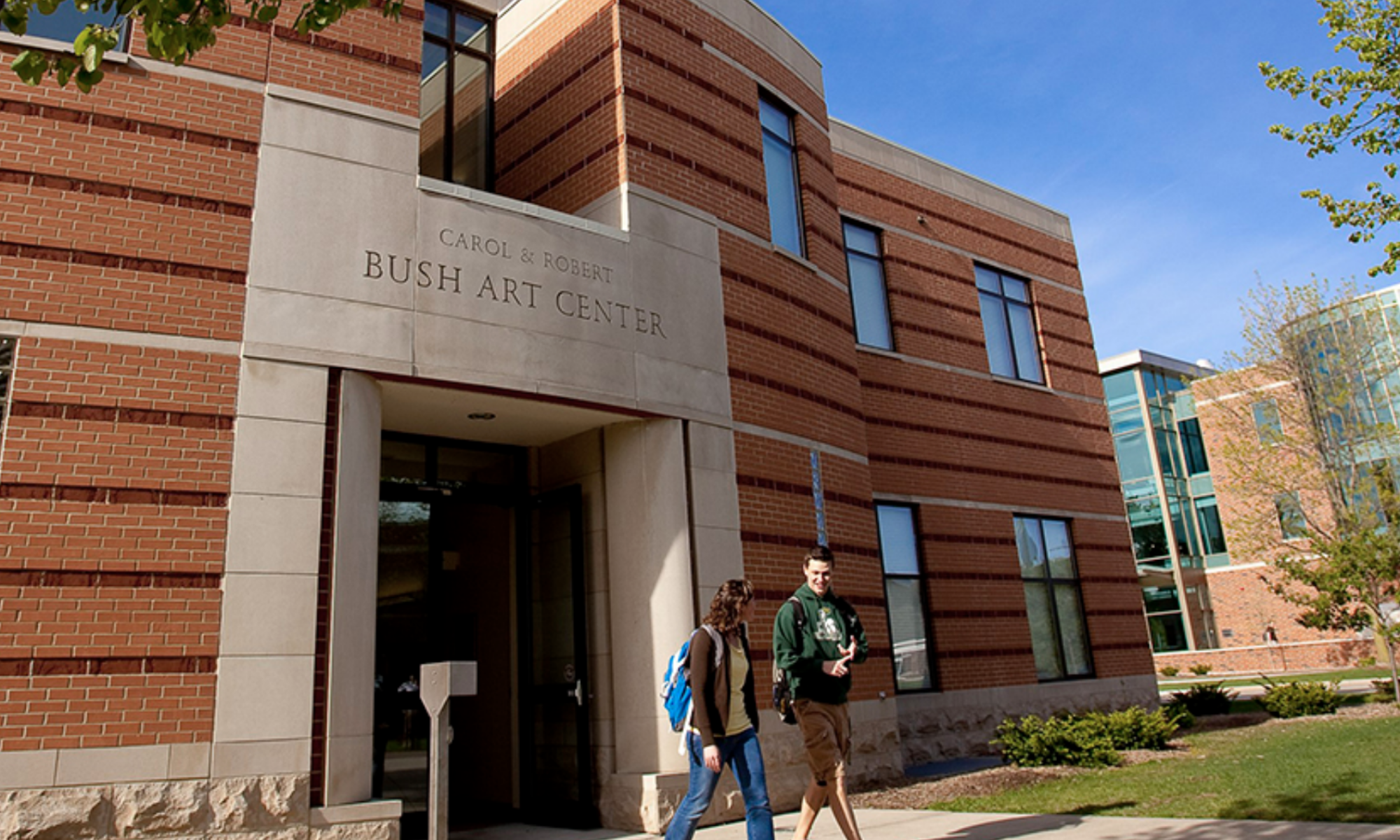
Join us tonight, 6:00–7:30 PM at the Bush Art Center for an evening celebrating 70 years of art at St. Norbert College.

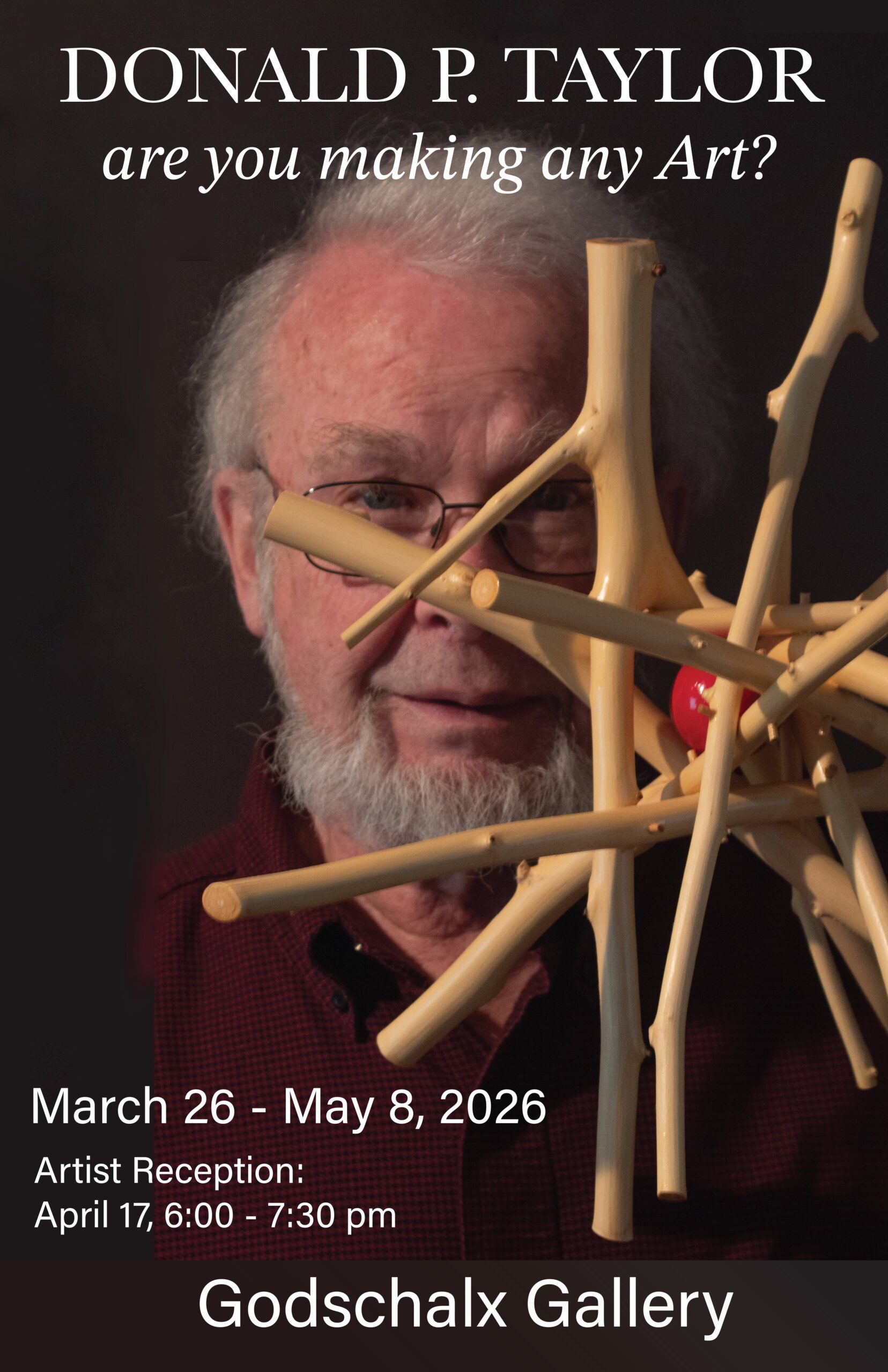
Experience four exhibitions: the Senior Capstone Exhibition in the Baer Gallery, new work by Donald P. Taylor in the Godschalx Gallery, Past Present Future featuring faculty across generations in the Permanent Collection Gallery, and Masking Tape, a rediscovered early video work by Bill Bohne in the Media Space Gallery.

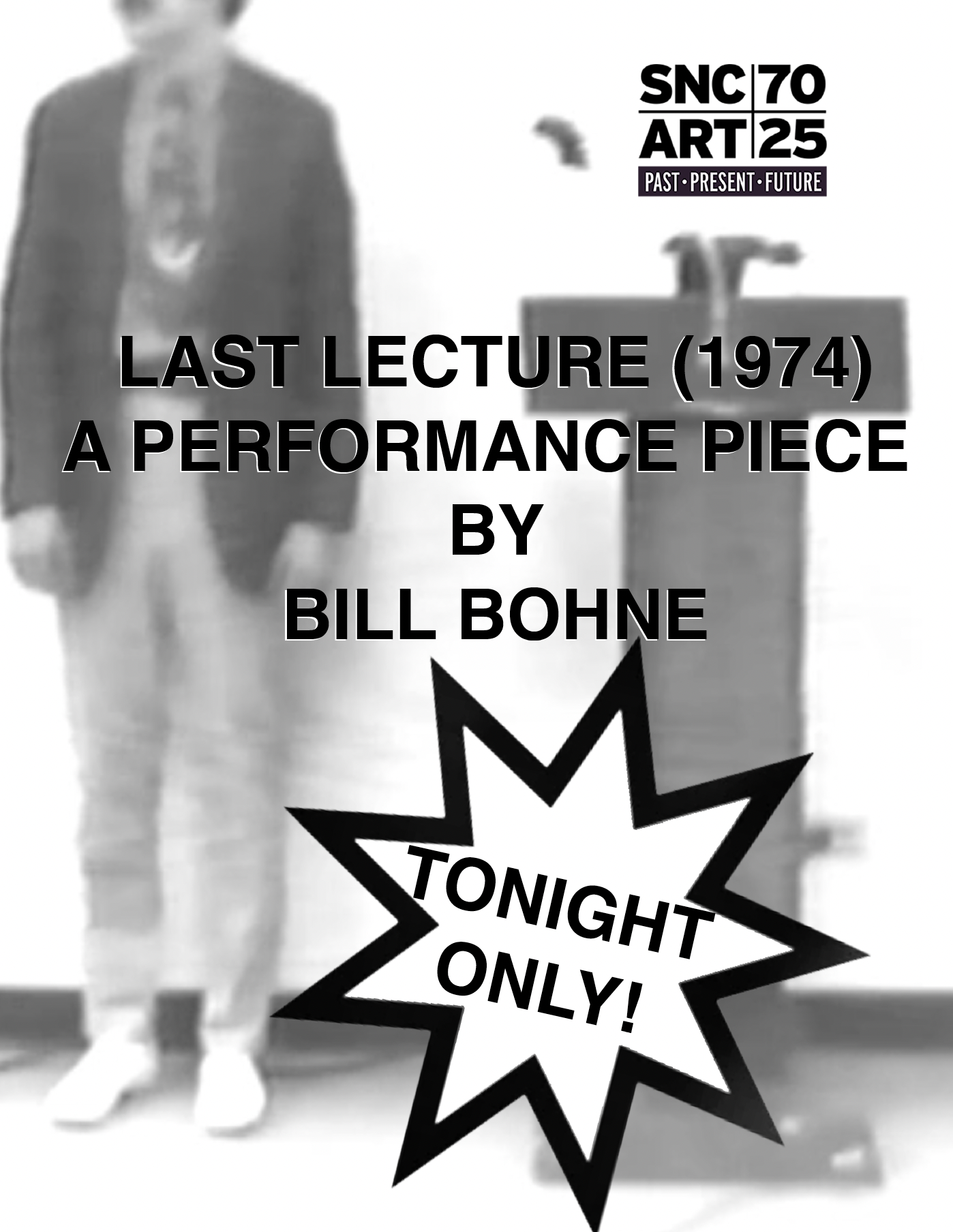
The evening also includes a special screening of Bill Bohne’s The Last Lecture in BAC 130!

Bill Bohne – Last Lecture: A Performance Piece (1974)
B/W, sound, 31:11, VHS transfer to digital video (original video source unknown)

Bill Bohne’s Last Lecture: A Performance Piece (1974) is a work in the vein of early conceptual video art, emphasizing duration, repetition, and the body. This approach frames performance as a procedural and conceptual act rather than a theatrical event.

The video begins with humorous meditations on the notion of the “last,” moving between popular culture and high art while foregrounding the lecture as a constructed performance. Language becomes both subject and material through repetition and self-reflexive commentary. Bohne states, “I don’t want to be there for my last lecture,” and goes on to say, “You’ll notice when you look around the room this evening that I am not there, only in a mediumistic manner.” These statements destabilize presence and authorship, aligning the work with conceptual strategies that privilege idea over object.

Formally, the video adheres to and disrupts the conventions of performance for the camera. Bohne’s face is never fully visible, either cropped out or turned away, reinforcing the sense of absence. Repetition structures both language and movement, while rudimentary analog editing reflects the technological conditions of early video.

Described by Bohne as a “death avoidance fake-out,” the work culminates in his promise to give the lecture the “run-around.” For the remainder of the tape, he circles the camera continuously. After briefly attempting to follow him, the camera returns to a fixed position, allowing him to pass through the frame at regular intervals, foregrounding a static viewpoint and durational action central to early conceptual video practice. The soundtrack layers repeated phrases of “this is my last lecture,” which Bohne describes as an incantation. This accumulation transforms language into a rhythmic, quasi-ritualistic structure, collapsing meaning into sound and duration. In this way, Last Lecture exemplifies how early conceptual video reduces performance to procedural constraints through which presence, authorship, and temporality are tested with both rigor and humor.

– Brandon Bauer (2026)

New Spring Exhibitions – Past Present Future!

The Bush Art Center Galleries are pleased to present a new slate of spring exhibitions celebrating the past, present, and future of the St. Norbert College Art Department.

This year marks a significant milestone: the 70th anniversary of the Art department and the 25th anniversary of the Bush Art Center as our department home!

The Art program was established in 1956 to bring art education to the campus community. Founded by Professor Daniel F. Dickhut, the College’s first full-time art faculty member and notably its first lay faculty member. The Art department played a pivotal role in shaping the institution’s evolution. In many ways, the Art department helped usher in a more expansive, interdisciplinary academic environment at St. Norbert College.

The exhibitions on view reflect this legacy, featuring selections from the permanent collection, new work by past and present faculty, and the Senior Capstone Exhibition, which highlights the achievements of graduating seniors as they prepare to carry their creative practices beyond the College and into the broader world.

Exhibitions Include:

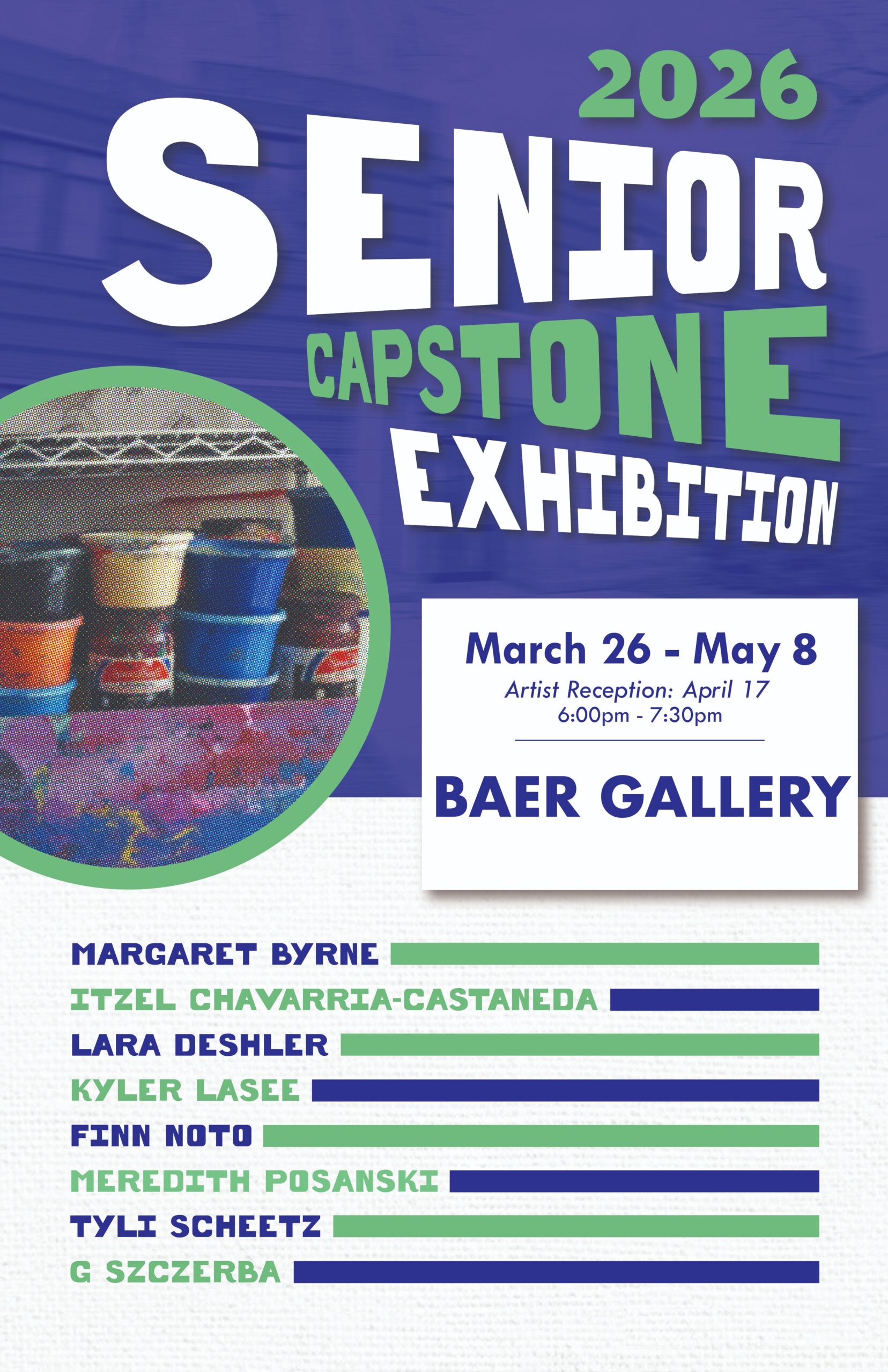
  • 2026 Senior Capstone Exhibition (Baer Gallery)
    Featuring work by Margaret Byrne, Itzel Chavarria-Castaneda, Lara Deshler, Kyler Lasee, Finn Noto, Meredith Posanski, Tyli Scheetz, and G. Szczerba.
  • Donald P. Taylor: are you making any Art? (Godschalx Gallery)
    Presenting new work by emeritus faculty member and former gallery director Donald P. Taylor.
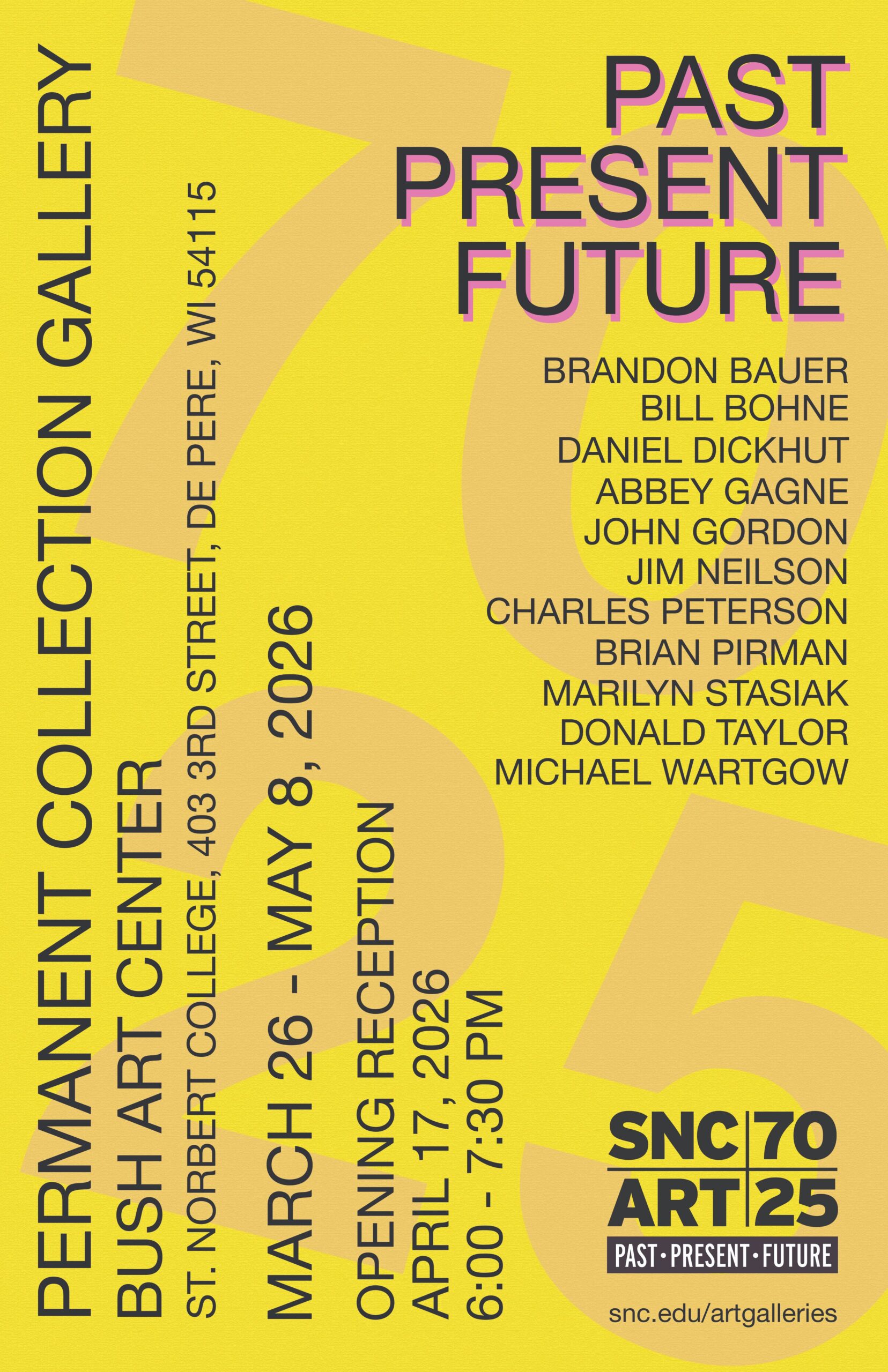
  • Past Present Future (Permanent Collection Gallery)
    Showcasing work by current and former faculty, including Brandon Bauer, Bill Bohne, Daniel Dickhut, Abbey Gagne, John Gordon, Jim Neilson, Charles Peterson, Brian Pirman, Marilyn Stasiak, Donald Taylor, and Michael Wartgow.
  • Masking Tape by Bill Bohne (Media Space Gallery)
    A work of early video art recently rediscovered and digitally archived for exhibition.

The opening reception will take place on April 17, 2026, from 6:00–7:30 p.m. and will include a special presentation of Bill Bohne’s video performance piece, The Last Lecture, in the Bush Art Center Lecture Hall (BAC 130).


Please join us in celebrating 70 years of art at St. Norbert College and the vibrant community of artists, educators, and students who continue to shape its future.

Storied Lives: Select Works by David Graham and Terri Warpinski

Storied Lives is an exhibition of remarkable photographs, featuring portraits by David Graham from his book Land of the Free and selections from Death|s|trip by Terri Warpinski.

Terri Warpinski, Anton Walzer, October 8, 1962

Accompanying Warpinski’s photographs are laser-cut text panels, which overlay historical maps. According to Warpinski’s artist statement,

Death[s]trip is a story of human mortality written on the landscape. In looking at present day Berlin through the filter of history, these works combine contemporary photographs and text with archival elements to reveal some of the consequences of enforced political borders. From 1961-1989, 140 individuals died in failed attempts to flee over the Berlin Wall from Soviet occupied East Germany to freedom in West Berlin. Focusing on these victims, Death|s|trip probes the contingent properties of meaning, memory, and reflection in relation to both the landscape and the photographic image.

Each site was photographed on the date that coincides with the anniversary of the victim’s death, in the specific location where the event took place.

David Graham describes his work as follows:

Land of the Free is photographer David Graham’s tribute to the American people in all their idiosyncratic splendor. A tireless traveler and a natural-born visual storyteller, Graham has photographed ordinary folks in their homes, at work, and at play across the nation to assemble a composite picture of America. Graham’s colorful portraits showcase the personalities who give America its character.

David Graham, Todd Gerding as a Hessian Granadier, Richboro, PA

Storied Lives is on display now in the Baer Gallery until September 21. Graham and Warpinski are the directors and curators of NewARTSpace, a local gallery and studio just across the bridge in downtown De Pere, Wisconsin.

Spring 23 in the Galleries

Stephanie Carpenter, Kinship: Belonging, 2019, Letterpress print from wood type

Stephanie Carpenter: Cultivating Community 

Baer Gallery 

January 23 -February 16

Coffee and Pastry Reception: Tuesday, February 7, 10:00 a.m. – 11:00 a.m. 

Stephanie Carpenter examines the way we create unique communities. She explores modularity and the use of language related to how we are connected. She earned an MFA from Indiana University and her work has been exhibited throughout the United States and internationally in Australia, Brazil, India, Italy and Japan. 

Object Matters

Godschalx Gallery 

January 23 -February 16

Explorations in clay, wood, and found objects by students in Art 224, Introduction to Sculpture. 

Speculative Futures: Visions from Caregiving Printmakers

Baer Gallery 

February 27 -March 28

Exhibition events: 

March 23, 10 a.m. Bush Art Center: Panel discussion in BAC 130 with artists Katie Ries and Carrie Scanga, and labor historian Jessica Wilkerson. Panel followed by a reception in the gallery.

Speculative Futures is a portfolio of prints that imagine the future of caregiving. All of the participating artists are caregiving printmakers. The portfolio includes an essay by labor historian Jessica Wilkerson. 

Design Localitas

Godschalx Gallery 

February 27 -March 28

Featuring designs by the St. Norbert College Student Design Center.

2023 Senior Art Exhibition

Bush Art Center 

April 11- May 4

Reception: Friday, April 21, 5:00 – 7:00 p.m.

The Senior Art Exhibition is the capstone experience for all St. Norbert College art majors.

Aram Han Sifuentes — Let Us Vote!

According to exhibition curator Brandon Bauer, “this exhibition brings together works by Aram Han Sifuentes that focus on democracy, citizenship, and political participation. The works in this exhibition manifest the notion of democracy as a contested space in which one can gain a political voice through citizenship, protest, or giving voice to those excluded politically.” It includes handmade protest banners, an Official Unofficial Voting Station, and a banner lending library.

A central feature of the exhibition is a wall of handmade protest banners. Sifuentes hosts workshops to teach sewing skills and banner-making techniques, passing on a traditional, intergenerational skills while drawing communities into conversation about protest and demonstration. Some banners were created by Sifuentes or during previous lending libraries, but a collection of banners made by campus community members are available to be checked out. Next to the poster is an instructional video on how to create a fabric banner with felt letters. A banner making workshop, with instruction by Moki Tantoco, will be taking place at noon on Thursday, October 20 at noon in the Mulva Library.

The St Norbert Community’s Protest Banner Lending Library

The Official Unofficial Voting Station is a symbolic voting station open to all. In addition to creating opportunities for anyone to cast a vote, stations bring together communities for conversation, protest, and celebration. Sifuentes, as a noncitizen immigrant, created the program in response to her inability to vote. The first iteration, prior to the 2016 election, included 25 collaborative activations of the station through performances and installations. The project was reiterated during the 2020 elections, with 50 voting station kits sent across the nation. A voting station is housed online, along with a developing archive of responses and vote tallies.

At the Bush Art Center’s Official Unofficial Voting Station, gallery visitors can fill out a freeform kind of ballot, sharing the reasons that they vote, as well as listing local, national, and global issues they’d like to vote on. The Official Unofficial Voting Station, a station for all people and for all issues, creates conversation around who can vote, and what issues visitors most want brought to the ballot. The anonymous ballot responses will be recorded and archived.

Ballots, a ballot box, and stickers, as well as voting rights informational handouts.

The exhibition will be on display between October 3 and October 27, with a reception from 2 p.m.-3:30 p.m., on Thursday, Oct. 20.

September Exhibitions, August 26 – September 21

Welcome to our 2019-20 season!  We’re kicking off the year with a celebration of creative work on campus.  Why We Collect, in the Baer and Permanent Collection galleries, features work from the St. Norbert College Permanent Collection.  After taking a look at some of the works collected by St. Norbert College, you’ll have the opportunity to add to, or start, your own collection with a purchase from the Art for All vending machine. The vending machine, curated by Katie Ries, Associate Professor of Art at St. Norbert College, offers the opportunity to purchase art for $5 or less. 

The Godschalx Gallery features April Beiswenger: “In collateral light must I be comforted”, an exhibition that navigates the intersection between clothing, technology, and the art of perception. April Beiswenger is Associate Professor of Theatre at St. Norbert College. 

During these exhibitions, which run from August 26 – Sept. 21, we encourage visitors to enjoy a self-directed exercise in Slow Looking.   A guide to this practice will be available in the gallery.  Also, join us for fun activities in the Bush Art Center during the campus-wide SNC Day event on Sept. 21, 10 a.m. – 4 p.m.


An Interview with April Beiswenger: Don’t be Scared of Making

IMG-9671

This week I had the opportunity to sit down with artist April Beiswenger and talk to her about her exhibition currently featured in the Godschalx Gallery, April Beiswenger: The Making and Giving Project.

On sabbatical from her regular position as a professor of Theatre Studies here at SNC, Beiswenger spends much of her time in the gallery doing just what she asks visitors to do: making and giving. The exhibition offers many opportunities for visitors to create and engage including: bracelet making, typing letters on a typewriter, coloring postcards, asking the sage advice of the Bird Oracle, and much more.

The following interview explores the philosophy and mission behind Beiswenger’s interactive exhibition, an exhibition that allows viewers—or rather makers—to revel in the simple and inherent satisfaction of creation and the joy that comes from giving a creation away. The overarching message she wants you to get? Don’t be scared of making. Just do it, move on, and then do it again.

IMG-9669


Katie Hopkins: Tell us a little bit about how the Making and Giving Project originated.

April Beiswenger: The idea behind the Making and Giving Project is that there is an art to making, and that’s what we learn as students and as adults. As we become artists we learn the “making,” but sometimes we miss the “giving” part. And so, it happened at my gallery show last year, [April Beiswenger: ‘I like this place, and willingly could waste my time in it.”] whenever I was in the gallery and I was working on that topographical map—gluing the beads down to that—people would come by and talk to me about it, so it sort of sprung from that idea of I’m gonna make things and people are gonna watch me make things.

What am I gonna do with the stuff I make? Well, I’m gonna give it away. Because we get all these skills that we’re not necessarily gonna use, you know, like beading and knitting and crocheting and all of this stuff that it becomes like an impassioned hobby and not necessarily lucrative. But we can’t not make, so what about just giving it away? So that’s kind of where it sprung from, like what if I just gave stuff away?


KH: Do you think that the location of your exhibition here at the SNC Galleries helps with that “giving” aspect of your mission?

AB: I think so. There’s a giving-ness to the St. Norbert College community that has been quite apparent ever since I got here, that idea of radical hospitality, that you don’t necessarily see in other [institutions]. I went to a Catholic school for undergrad, went to a Catholic school for grad school, I worked in another Catholic school when I first started teaching, and now here. There’s always an element of giving when working for Catholics which is interesting, but there’s this element of giving that they had, but they didn’t have ingrained in their mission, this idea of radical hospitality and Communio, which is one of the reasons I love working here so much. [Here] they’re just open hearted and giving and it kinda works really nice, and watching people engage with the elements in this room makes me really happy.


KH: Is there a certain element or activity that visitors seem to like the best so far?

AB: That typewriter! So I bought this typewriter a bunch of years ago whenever we were gonna have a Sandbox over in the library—this maker space—and it never really ended up coming in. So [the typewriter] moved with me when I moved houses and I tripped over it in my workshop at home and I thought “let’s use the typewriter,” why not? There’s an activity to typing that you don’t get with a computer or texting. There is a physical, mechanical-ness that you get using a typewriter that you don’t get anywhere else that’s really visceral. My mom was a secretary for ages and ages, but when my sister and I were kids, she had this typewriter that she was like, please shut up, use this, and so Gina and I, my next younger sister, we would type for ages with this thing. And then my youngest sister Lisa, and Adam, my brother, we all had an experience with this typewriter. And the typewriter goes with the other mechanical objects in the gallery like the Rigid Heddle Loom and the Inkle Loom and the crocheting, that are mechanical production, hand production that is just so wonderful. There’s a pleasure to it, a pleasure to using your hands.

IMG-9670
The typewriting station.

KH: Do you think that the students in particular are drawn to the typewriter because they are so used to just texting on their phones?

AB: I absolutely think so. I think it’s a novelty. And it’s something that is, unlike the looms, where you have to have a little bit of skill to use the looms, the typewriter is just like your laptop and you just clunk clunk clunk clunk clunk and you’re on your way. Hopefully I can do another Making and Giving event, like last week I did silk dying and this week is the Yarn-In*, and so I have two and a half weeks left, and in that time I’ll do a “hey come touch a loom, you’ve never touched one before, come touch a loom!” And people will probably not think anything of it now, but it’ll intrigue them and ten years down the road, twenty years down the road they’ll really enjoy that and say, hey, I’m gonna buy a floor loom and see what happens.

*The Yarn-In is Friday, September 14. It is an all-day event in the Godschalx Gallery. Come and go as you please with your own project, or learn the basics of crocheting from April.


KH: Where can people find out when the Making and Giving Events are happening?

AB: I put them on the SNC news and I send out a classified.

IMG-9662
Silk Scarves dyed at the first Making and Giving Event.

KH: Do you have a favorite making station in here?

AB: The looms. I picked up weaving a couple years ago, and I did beading and it was alright. And then I got into this and  started it when I started teaching the History of Clothing and Fashion. I don’t want to give the illusion when I teach this class that these clothes sprung fully formed from a machine. In history there’s actually people making this stuff. When you see Marie Antoinette over and over in these fabulous dresses, she has a woman who runs her dressmaking studio and had the ear of the queen and affected policy. It’s the idea of somebody who makes so well that they can affect policy change. And you know that happens all the time.  And so it started there and then I did this great weaving workshop in May up at Sievers School of Fiber Arts in Washington Island. My mom and I went up and weaved pieces which was great because I got to spend time with my mom, and again it’s that mechanical making that is so, so satisfying.


KH: There’s a sense that you really want people to be more well-balanced and that making/mechanical production can help with that.

AB: I think so, I think so. The other one I like a lot, which is less active is the Bird Oracle and I kinda dig that. It’s just come and pull a card and get insight.


KH: I’ve asked the Bird Oracle a few questions and I’ve loved it every time.

AB: Excellent! I have the weirdest words in there. I went online and searched weird words and I got these lists and used them. I don’t know what they mean! I’ve forgotten what they mean. I have them written down in my notebook and every once in a while I have to go what did that word mean…oh yes, that’s what it was!


KH: I believe there’s magic in it, I’d like to think so.

AB: For sure. Especially because I have no clue what they mean.


KH: That’s the beauty of it! You can interpret it however you want.

AB: The magic of a dictionary.

IMG-9663
A quilt of stamped denim squares. Take one down and take it home.

KH: Do you have any future plans to keep this project going?

AB: Yes. This has worked really well. Better that I thought it would. I think the idea of performative making is something I’m going to continue to explore. I do that in my classes. We make stuff together in my design classes and in our lab class for the show. We make together and it’s like connective tissue. It’s the old idea of the quilting bee. You sit around and make together. We used to call it the stitch and bitch. My aunts and family would get together and get into a costume shop and we would all just have our projects and we’d just sit around and complain or gossip. It’s really fun, but it’s kinda stereotypical that you would expect a costumer to know all the good gossip. Which is not true. Carpenters know all the good gossip. So yeah I really like this. I might figure out a way to take it out into Green Bay, maybe with the Boys and Girls club. Maybe with taking it into Art Garage and doing a mini residency. The only reason it works really well right now is because I’m on sabbatical. I was able to take a month out of my sabbatical and spend time in here. During the regular semester there’s no way.


KH: What’s nice is that the concept of making and giving can easily be taken out into the world by anyone. Because of that, this is one of the most approachable exhibitions we’ve had in the galleries especially with visitors being able to physically engage with the art.

AB: And that’s why my next couple [of exhibitions] will probably be very performative.


KH: Those are always a big hit.

AB: I hope so.

End.

Catch the Making and Giving exhibition in the Godschalx Gallery located in Bush Art Center until September 28, 2018. Keep an eye out for those pop-up Making and Giving events and be sure to visit the gallery on SNC day, September 22 for more special activities.

IMG-9661
A kaleidoscope of origami butterflies.

css.php