Bill Bohne’ Masking Tape (Early 1970s, Date Unknown)
Single Channel Video transferred from ¾” UMATIC Tape B/W, Silent, 11:50
Bill Bohne’s video Masking Tape was created in the vein of early conceptual video art, specifically within the mode often described as “performance for camera.” Emerging in the late 1960s alongside the growing accessibility of portable video technologies, this approach was adopted by many artists exploring the possibilities of this experimental medium. These artists used the camera as the primary site of the work itself. Typically employing fixed framing, minimal editing, and durational actions. Such works foreground the body, repetition, and constraint while stripping away narrative and spectacle in favor of conceptual procedure.
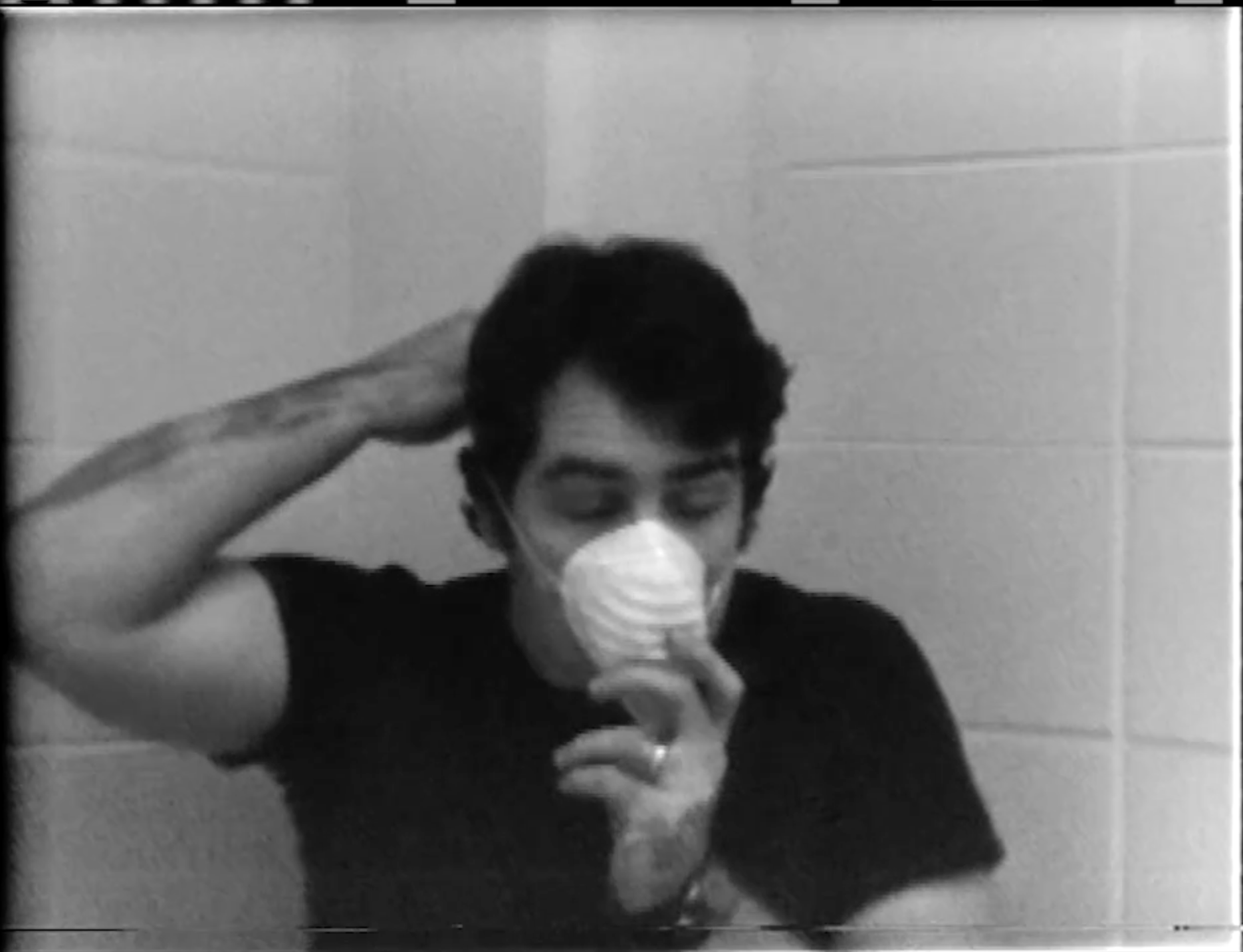
Masking Tape adheres closely to these conceptual strategies. The camera remains static, focused on a head-and-shoulders composition as Bohne methodically places disposable dust masks over his face, one after another, throughout the tape. The action is simple, repetitive, and task-based, aligning the work with conceptual art’s emphasis on systems and instructions. At the same time, the accumulating masks gradually become sculpturally absurd and begin to impede the mask’s function, introducing a subtle tension between safety and suffocation.
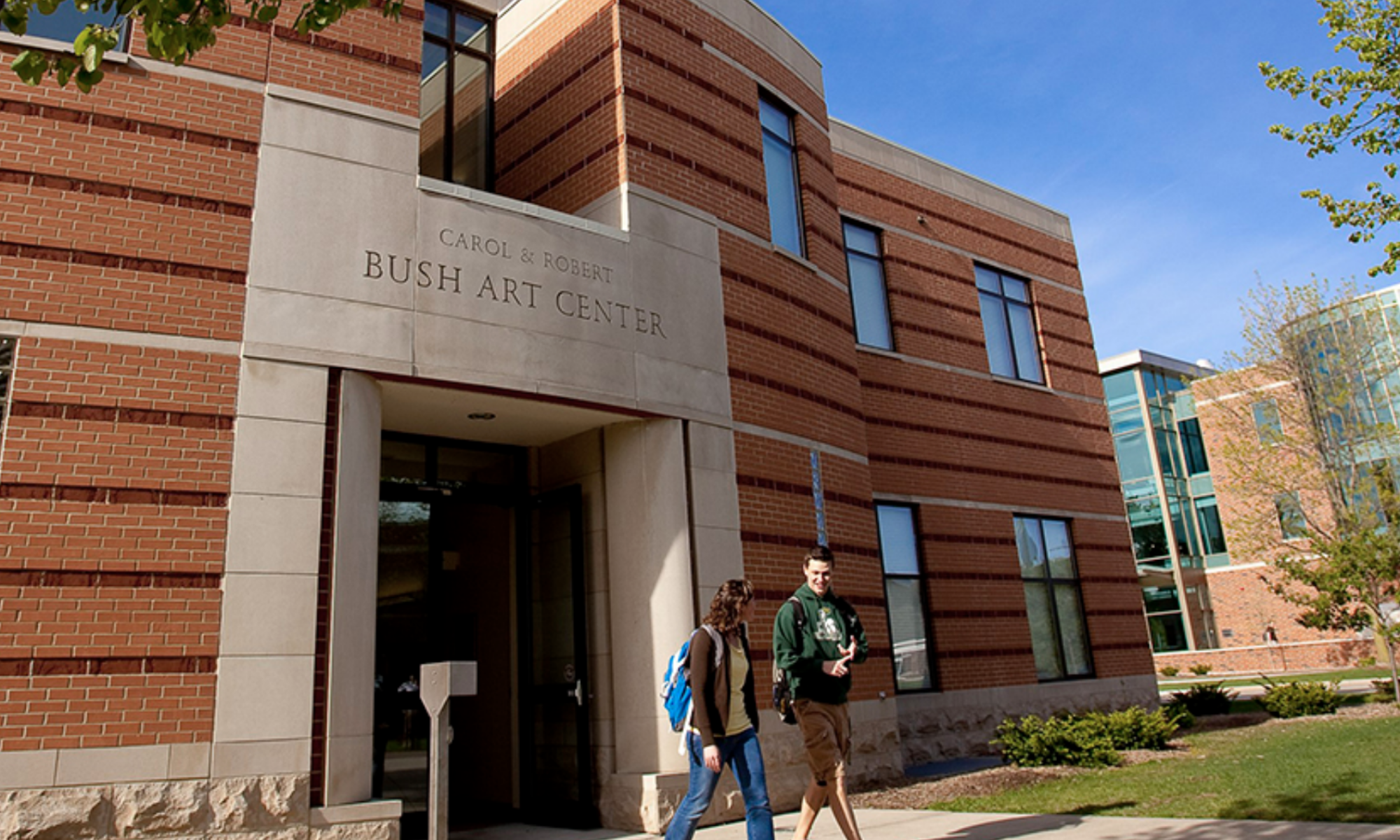
Originally recorded on 3/4″ U-MATIC tape, the video was rediscovered in a storage area of the Bush Art Center and later transferred to digital format by Archival Works in St. Paul, Minnesota. This material history reinforces the work’s origin in an early moment of video experimentation, when artists worked with emerging, often fragile recording technologies that have since required preservation to prevent deterioration.
Viewed today, Masking Tape accrues new layers of meaning. The act of placing mask upon mask, once read primarily through the lens of conceptual procedure or performance endurance, now inevitably recalls the lived experience of the recent COVID-19 pandemic. What may have originally functioned as an abstract or absurd gesture takes on renewed resonance as an image of protection, anxiety, and the social politics of masking. The work’s repetitive accumulation mirrors the psychological weight of prolonged crisis. In this way, Bohne’s video not only participates in the historical discourse of early video art but also demonstrates how such works can be reactivated by contemporary conditions, generating meanings beyond their original intention and context.
– Brandon Bauer, Associate Professor of Art (2026)